Medium Format Forum

Register a free account now!

If you are registered, you get access to the members only section, can participate in the buy & sell second hand forum and last but not least you can reserve your preferred username before someone else takes it.

H4D-50 one time around the world....

kixx

New Member
Joined
Jan 5, 2011
Messages
2
Hi Everyone :)

I have been shooting lots of fashion, lifestyle, glamour and portrait on location in 2009/2010. Most of the time in tropical locations with 2-3 models, stylist etc. - Sofar I have been using the Nikon d3X with only the best lenses. End of 2010 I have reached the limit of my camera. I am not really happy about the image quality any more and am thinking about switching to the H4D-50 + the 35-90mm.
Nikon will probably bring out the D4 late 2011 but I doubt it will satisfied my perfectionism.
I would be very thankful if you guys have a few answers for me...go ahead and answer in your own biased thoughts. I really appreciate subjective thoughts and feels about the H4D.

- I will be traveling for almost 2 years. Not Backpacking but to some 3rd world countries. Most of the destinations will be tropical. Warm, hot climate. How does the H4D handle moisture, big temperature jumps (e.g. from climated hotel room to 100+ Fahrenheit sunny Beaches)

- How do you guys handle the problem on leaving your camera in the hotel room etc. - Even if its completly insured it would ruin my traveling plans if it gets stolen. Any thoughts?

- I have searched the web but found no real good comparison between the nikon d3X and H4D comparing NOISE from RAW images. I played around with the H4D-60 on the photokina for a while and even iso 200 was already really grainy/noisy, but its was very low light there so hard to compare fairly.

- How does the focus handle moving objects. Is it possible to photograph a model which is e.g. running at you (dynamic fashion shots)

- Cromatic Abberations. Is a big issue on the d3x which often really anoys me and need 5min extra on every picture to accuratley correct it in photoshop, rawconverter etc.

Thanks for any thoughts and advices....

P.S. Please excuse my bad english. Thx :)
 
H4D-50 one time around the world

Hi

I wish I could help you re your reasonable questions re the H4D-50 however I am still at the investigation stage myself - so anything I could say would be theory not based on experience with the camera in question.

I currently shoot weddings and landscape with a Canon 1D Mk 4 and a Canon 5D Mk2. While I have a fair selection of Canon lenses I am hoping that with the H4D - 50 (extra resolution) and the Medium Format lenses, i will be able to improve the detail and sharpness in both my landscapes and some of the posed wedding groups.

I had a brief test session with a Mamiya with a 40 mp back tested against my Canon 5D Mk2. On a pixel by pixel comparison I felt the Canon held up well and the only obvious gain was the slight (maybe 5 to 10%) gain in dynamic range (based on capacity in RAW to pull detail back out of the highlights and shadows.

The questions I still have not resolved is the question of a depth of field which is even more narrow than the full frame sensor DSLR coupled with ISO noise which seems to mean 400 ISO is a high as one might wish to go means that artificial lighting will often be required. I suspect that for your fashion photography artificial lighting will be a given.

Hey, your English seems good to me.

Cheers for now


mal @ malmac
 
Hi,

I steped up from Canon 5D II to Hasselblad H2 with PhaseOne P25 (30 MP digital Back) some weeks ago. The issues are more than 5 years old. But the difference to the 5D II is amazing. Hasselblad has an unbelievable quality of the lenses. The resolution of the back and the colors are better than the 5D. Especially the possibilities to work with the RAWs after shooting are great.

But:

You realy need good light or a strong flash. The autofocus is slow. And up from 400 ISO there is of course noise. But it is great to use a flash with 1/800 s. So it will be interesting to work under a sunny sky with flash.

I will go to Kenia for 3 weeks in February. I will realise a reportage and a project in making portraits. I will take both systems with me.

I invested in the Hasselblad-system (all used) to have more dynamic-range under difficult light-conditions.

I will give a little report if I am back.

mfg eric p.
 
thanks for the thoughts guys.

Sofar I will probably stick with my d3x. Lets see if Hassi will lend me one for 2 weeks seychellen where I could test it. Concerning noise from the tests I did sofar the H4D is unusable above ISO 100 which is not very useful in low light conditions. the D3x is still acceptable at iso 200. Iso 400 on the d3x has lots of visible noise. I might be a bit strict on noise, but I am a perfectionist and only accept perfect quality.
 
H4D-50 one time around the world

It is very helpful to those of us who are considering the move to Digital MF to be able to get objective feedback from photographers like ericp who have already made the move.

I for one would be very interested in being able to download some actual images in RAW from your 5D and your H2D so I can experience the difference in the image quality.

Thank you very much for taking the time to reply.


mal @ malmac
 
It is very helpful to those of us who are considering the move to Digital MF to be able to get objective feedback from photographers like ericp who have already made the move.

I for one would be very interested in being able to download some actual images in RAW from your 5D and your H2D so I can experience the difference in the image quality.

Thank you very much for taking the time to reply.


mal @ malmac

I did not a direct comparison and I do not like such technical peep-shows ;-)

I will upload tomorrow some examples.

yours eric
 
H4D-50 one time around the world

Eric

Thank you for your reply.

I am planning to be in Sydney in March to test a H4D-50 and want to have done my homework before using the camera for a very limited time and in what will probably be a very limited situation.

It is a substantial investment and one I want to be happy I made. Therefore just trying to make my expectations very realistic so I won't be disappointed.


Thanks for your help.

mal @ malmac
 
You do not need to compare IQ of MF digital with Nicans in a one to one situation to see that MF digital wins with flying colors.
 
You do not need to compare IQ of MF digital with Nicans in a one to one situation to see that MF digital wins with flying colors.

Depends on what you want to use them for. High ISO is not the MF digibacks thing, lets face it. Other than that: sure :)
 
H4D-50 one time around the world

Thanks for your input.

As we all know, MF is not cheap and MF Digital can be expensive in pretty much any person's terms.

Given I am interested in going MF Digital and I prefer Hasselblad to Mamiya / Phase 1, I am on this forum to try and learn more about these cameras.

My main questions re ISO are;
Why do MF digital backs gets such bad press re high ISO performance?
Is this a case of larger sensors produce more noise because there is more general electrical activity going on in the camera and sensor?
Is it that Hasselblad and Phase 1 just have not developed the noise suppresion algorithims that Canon and Nikon have got sorted?
Is it that MF users have higher standards, so expect only the finest image quality - I know my Canon gear used at over 400 ISO is starting to see visible noise.
Or is it just a bit of all of the above?
Or is there something else, that I am missing?

mal @ malmac
 
noise

Hi Malmac,

MF users have normaly also a little bit money for good light-equipment, so they (so I think) no need to work in darkness with high ISOs.

My experience is: if I am shooting with ISO 400 with my PhaseOne P25 back there is a little nois of course. But it is easy to correct this with LR3.

Basicly: the high resolution makes you able to correct for instance brightness and colors much more than on RAWs taken with a FF-sensor. It seems like a very elastic rubber-cable.

And: because of the big sensor the "pixels" you see in noisy pictures are - in relation to the picture - much smaller as in pictures taken with a 24x36mm sensor - so my impression.

So, if I compare noice of my MF-back with my Canon 5d II it seems that ISO 800 at my Canon is like ISO 400 with PhaseOne, you can push the results of the PhaseOne with no problems to an "higher ISO".

But: long-time-exponation is much better than long-time-exponation with Canon in RAW-modus (I only shoot RAWs). Ther is no noice, if you take an 30 seconds exponation in darkness with the PhaseOne.

Please bash me if I am writing technical garbage. I do not like pixel-peepings, I like to take pictures... ;-)

eric
 
Good Evening Eric (well it is evening here in Australia)

Thank you for taking the time to share your thoughts on noise in MF.
My reason for taking an interest in the usable ISO (which I am now assuming is around 400iso) is that i understand that the bigger the sensor, the narrower is the depth of field at a given distance for the same f stop. So I know from using my Canon gear that sometimes in an attempt to balance shutter speed (to avoid movement blur when my portrait subject moves) I open up the aperture - so at f2.8 for instance I end up with the bride sharp but the groom or bridesmaid soft.

I am under the impression that if I was shooting MF I would have to shut down my aperture one or two stops to get the same effective depth of field. So to compensate for less light coming into the camera through narrower aperture, I expect to either, increase ISO, slow shutter or add light.

So lets assume we are going to have to use more light, what lighting set up do you use when shooting portraits on location?

I have a Profoto Acute B 600w set up and I couple this with three 580 Ex2 speedlights controlled by pocket wizards. I understand the pocket wizards will work with the H4D but I expect that TTL will not be possible.

Thanks agian


Mal
 
light

Hi Mal,

I am not a profi. I use a Walimex-daylight with energy-saving-daylight lamps (180 W), the daylight in my studio (two big windows to the north) and a flash Metz 76, directed to the ceiling.

The camera is normaly mounted on a tripod. ISO 200

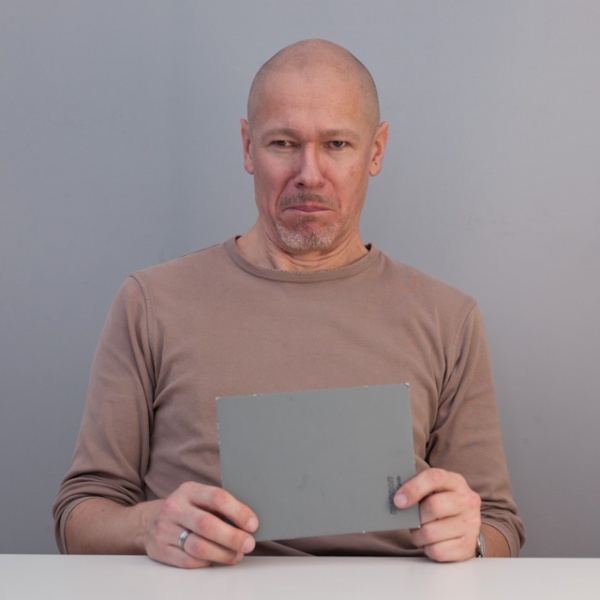
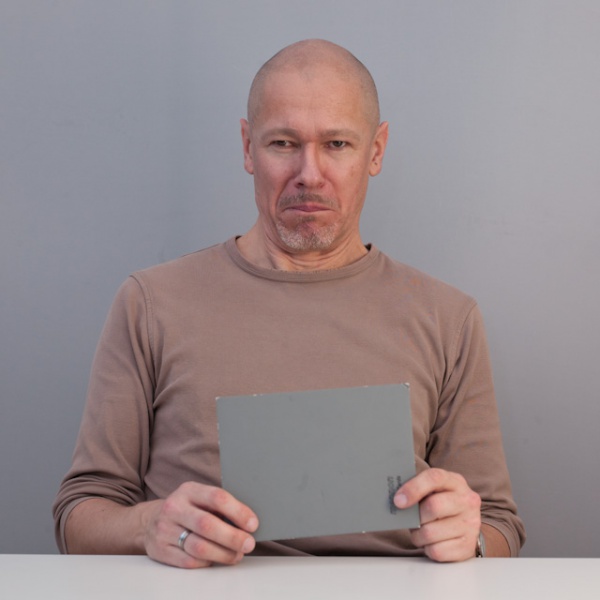
testfoto1 with grey-card

f 8 / 1/45s

With the Metz-flash I only like to light up.

testfoto2
free hand

fotos: no big art, only to show you, what is possible...

AF: the newer models of Hasselblad have an advanced AF. So I think, it will be possible to work very quick with moving objekts.

I like to take pictures in a quite way with no hectic. For me this is the best camera I ever had.

If I use the camera with mirror up it is easy to take pictures from the free hand as well as with a small FF-camera and also without flash.

I liked to shwo you some examples, but the given maximum in this forum for jpegs is so few, that it is not possible to convert the RAWS in a high resolution here.

Try to test a Hassi with you flash-equipment!

Greetings from Berlin

eric
 

Attachments

  • CF005027.jpg
    CF005027.jpg
    75.9 KB · Views: 29
  • CF005027.jpg
    CF005027.jpg
    75.9 KB · Views: 30
  • CF005345.jpg
    CF005345.jpg
    57.9 KB · Views: 31
  • CF005345.jpg
    CF005345.jpg
    57.9 KB · Views: 29
Hi Eric

Thank you agin for the reply. I was going to ask where you live and you have told us Berlin. My niece lives in Berlin and works as a graphic designer.

The photo without the grey card, what lens did you use and what were your camera settings? The reason I ask is that even in this small JPG it is obvious that the depth of field is narrow.

Re the AF on H4D, reports seem to suggest that it is quite good though I will still test the process before making a final decision.

Do you take photos away from the studio where you only have the Metz 76 if you need additional lighting? I ask because I am not worried about light when I am in my very small studio or when we we set up a studio with strobes powered from the wall socket (mains power).

I am however interested in the performance and ease of use of the Metz 76 system.

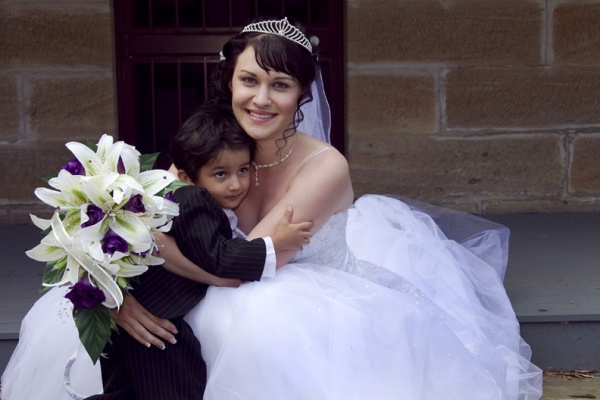
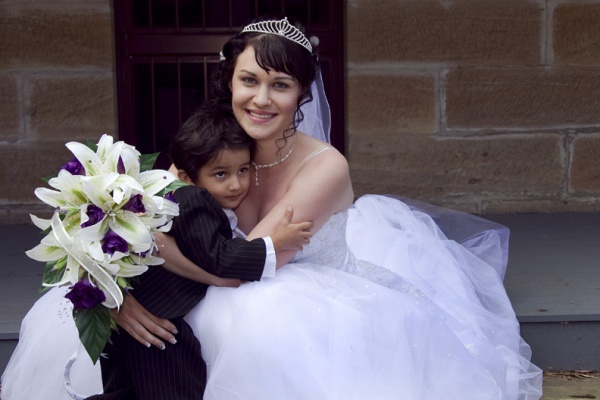
Here is a couple of my photos taken recently using my current Canon system. You can also check out our website at www.malmac.net.

Cheers and thank you for your help.


Mal
 

Attachments

  • front page events.jpg
    front page events.jpg
    73.5 KB · Views: 28
  • malmac_4943.jpg
    malmac_4943.jpg
    114.6 KB · Views: 23
  • front page events.jpg
    front page events.jpg
    73.5 KB · Views: 27
  • malmac_4943.jpg
    malmac_4943.jpg
    114.6 KB · Views: 25
Hi Eric

Thank you agin for the reply. I was going to ask where you live and you have told us Berlin. My niece lives in Berlin and works as a graphic designer.

The photo without the grey card, what lens did you use and what were your camera settings? The reason I ask is that even in this small JPG it is obvious that the depth of field is narrow.

2,8/80mm settings: I am not in office an must see tomorrow in the evening to the exifs...

Re the AF on H4D, reports seem to suggest that it is quite good though I will still test the process before making a final decision.

Do you take photos away from the studio where you only have the Metz 76 if you need additional lighting? I ask because I am not worried about light when I am in my very small studio or when we we set up a studio with strobes powered from the wall socket (mains power).

I am however interested in the performance and ease of use of the Metz 76 system.

I will test it from 31.01. - 16.02. in Kenia. After this I think, I will know more... In Berlin now it is very dark...

Here is a couple of my photos taken recently using my current Canon system. You can also check out our website at www.malmac.net.

Cheers and thank you for your help.


Mal

yours eric :-)
 
you liked to know the exifs of the other foto:

1/45 s, f 2m8 flash, free hand

yours eric
 
Hi Eric

Thanks for the info.

I am seeing that the f2.8 setting gives a fairly narrow depth of field.

Guess that I am just trying to get my head around how much different the DOF is with the larger sensors on the MF cameras.

Cheers


mal
 
Thanks for your input.

As we all know, MF is not cheap and MF Digital can be expensive in pretty much any person's terms.

Given I am interested in going MF Digital and I prefer Hasselblad to Mamiya / Phase 1, I am on this forum to try and learn more about these cameras.

My main questions re ISO are;
Why do MF digital backs gets such bad press re high ISO performance?

Because most people initially using the MFD cameras do no know how to process the files. Plus, unlike 35mm DLSRs the MFD camera does very little to the files such as AA filtration on a CMOS sensor, which smooths noise but destroys detail. Also, many people examine and compare the files @ 100% without regard to the fact that the MFD file is almost 2X the size. Nor is the aspect ratio difference taken into account ... MFD needs very little cropping to make standard prints where 35mm DSLR ratio loses more.

Is this a case of larger sensors produce more noise because there is more general electrical activity going on in the camera and sensor?

Medium Format cameras are CCD sensors and 35mm DSLRs are CMOS sensors. To avoid moiré and artifacts, 35mm DSLRs have AA filters which mushs up detail compared to CCD sensors.

Is it that Hasselblad and Phase 1 just have not developed the noise suppresion algorithims that Canon and Nikon have got sorted?

See above.


Is it that MF users have higher standards, so expect only the finest image quality - I know my Canon gear used at over 400 ISO is starting to see visible noise.
Or is it just a bit of all of the above?
Or is there something else, that I am missing?


Yes, expertise in processing MFD files which is different that what most people are used to. I do not have noise issues with my H4D/40 or CF39/MS shooting professional assignments for picky clients ... I will take delivery of a H4D/60 next week and doubt that will be an issue either. I have shot with a Nikon D3X for over a year before using the MFD in its place for more critical work, and a Canon 1DMK-III before that. Horrible, plastic looking files IMO. I'd never go back.

mal @ malmac

-Marc
 
Marc


Thank you very much for taking the time to assist me with your experience.

I hope you have time to express some thoughts on this question.

Why did you choose Hasselblad over Mamiya/Phase 1?

I guess I am seeing Hasselblad Vs Phase One as similar to Canon Vs Nikon.
Once you have bought into one brand it is very expensive to change horses mid stream.

Any thoughts are welcome.

Thanks


mal
 
Mal,

I actually have swapped systems a number of times ... both with 35mm DSLRs and with MFD ... and you are right, it is expensive to do that.

The following is my opinion only ...

I have owned a number of MFD systems, sometimes at the same time. I chose Hasselblad H over Phase One for a number of reasons:

I do not like the Mamiya camera. It is not as modular and cannot take a waist-level finder. It requires standard AA batteries in the grip and another battery in the back. The grip batteries have to be changed frequently. I don't like the ergonomics and it feels cheap compared to the Hasselblad H. IMO, most of the HC lenses are superior to the Mamiya/Phase lenses and Mamiya doesn't have anything that compares with the HCD35-90 zoom or HC100/2.2 lenses, not to mention the HTS/1.5 tilt shift attachment that works with many H lenses from 28mm to 100mm.

I like the H camera because of the control layout, and handling. The focusing of the H camera has always been superior to the Mamiya/Phase camera ... right up to the current H4D with True Focus/APL.

The principle difference between the two is the H is a Leaf shutter system, and the Phase One is a focal plane shutter. Each has its own advantages/disadvantages. I use flash and strobes in studio and outside so prefer leaf shutter. When working hand-held in lower lighting, the H has less shutter vibration. While Phase One now offers a few leaf shutter lenses I still prefer that all my lenses be leaf shutter.

Frankly, the digital backs from Phase One and Hasselblad are pretty comparable, and with skilled processing techniques neither offers any significant advantage over the other. The older Phase One P45+ does have the best long exposure capability of any back made ... but it isn't as simple as just shooting a long exposure. You have to do two exposures for each image of equal time ... so if you shoot a 20 minute exposure you have to do a second 20 minute exposure for black calibration. I believe the current Hasselblad 40 and 50 meg camera will do up to 64 seconds and I've never needed more than that. The P65 and H4D/60 both use the same Dalsa sensor and neither do long exposures at all.

There is no doubt in my mind that the H4D/40 is superior to the current Phase One equivalent because the Hassey does a respectable ISO1600 (when needed), has True Focus, and better lenses.

For extremely critical still life work Hasselblad offers the H4D/50 Multi-shot which produces the best per-pixel image quality available today ... and Hasselblad has recently announced a new 6 shot module for the H4D/50 that will produce a 200 meg RAW file ... which no one else can do or come close to ... not even the Leaf Aptus12 with 80 meg. So, for image quality in the studio or inside on location, Hassey still rules.

I currently still have two MFD systems that do different tasks. A Leica S2P which is a focal plane 38meg medium format kit that handles like a 35mm DSLR type camera and basically replaces most 35mm DSLR cameras I used to use ... and the Hasselblad H4D/60 which is the big gun in my gear closet.

-Marc
 
Back
Top